Why Research Matters When Choosing a Teacher in Aesthetics

Would you learn aesthetics from someone who has never contributed to the literature?
In medical aesthetics, we see this every day. Practitioners with zero peer-reviewed contributions are teaching "masterclasses" to thousands. They teach what they were taught, not what they have actually investigated.
In 23 years of practice, I have performed over 40,000 treatments. But experience alone is not the benchmark of a mentor. The hallmark of an elite teacher is contribution to the global body of clinical evidence. Research is the difference between an opinion and a standard of care.
The Evidence Base: 12 Peer-Reviewed Publications
When you choose a mentor, you are choosing the evidence base they stand on. Below is the research I have co-authored. These papers haven't just sat in journals; they have changed the way we handle complications and injection techniques globally.
1. Reversing Blindness: The Goodman & Clague Protocol (2016)
Reference: Goodman, G. J., & Clague, M. D. (2016). Dermatologic Surgery. Key Finding: This was the first paper to document and propose a rethink on hyaluronidase injection for retinal artery embolism. We looked at whether there was another option for treatment when intraarterial injection occurs. This work laid the groundwork for modern emergency protocols.
2. The Aspiration Myth: An Exercise in Futility (2021, 2022)
Reference: Goodman et al. (2021, 2022). Aesthetic Surgery Journal. Key Finding: We proved that neither positive nor negative aspiration should be relied upon as a safety maneuver. In fact, we called it an "exercise in futility." Movement of the syringe during aspiration makes the practice fundamentally unsafe. This is quite terrifying when you think about it. This research won a Best Paper Award and forced a global shift in how we teach injection safety.
3. A New Standard for Midface Restoration (2018)
Reference: Shamban, Clague et al. (2018). Aesthetic Plastic Surgery. Key Finding: We introduced a novel and more aesthetic injection pattern for malar cheek volume restoration. This wasn't just "filling" a face; it was an architectural approach to restoring volume that respects the natural movement of the midface.
4. Minimizing Risk of Visual Loss (2020)
Reference: Goodman et al. (2020). Aesthetic Surgery Journal. Key Finding: A global consensus on bedside management for hyaluronic acid embolic visual loss. This paper received a Best Paper Award and remains the gold standard for practitioners facing the most feared complication in aesthetics.
5. Managing Late Tissue Nodules (2023)
Reference: Goodman et al. (2023). Aesthetic Surgery Journal. Key Finding: We provided a clinical framework for making sense of late tissue nodules. This helps practitioners differentiate between biofilm, inflammatory responses, and product issues, ensuring patients get the right treatment, not just more hyaluronidase.
6. Hyperdiluted Toxin for Scars (2024)
Reference: Clague et al. (2024). Plastic and Aesthetic Nursing. Key Finding: A novel protocol using hyperdiluted botulinum toxin and IPL for hypertrophic scar reduction. This expands the utility of toxins beyond "wrinkle relaxation" into therapeutic skin remodeling.
7. UK Consensus Guidelines for Vision Loss (2026)
Reference: Sansome, Clague et al. (2026). Aesthetic Surgery Journal. Key Finding: I was honored to contribute to the UK’s national guidelines for managing filler-induced vision loss. This ensures that the safety protocols we develop in Australia have a global impact on patient safety.

Why Peer Review Changes How We Teach
The term "expert" is used loosely today. In a clinical setting, an expert is someone whose work has been poked, prodded, and scrutinized by a panel of their peers. When we published the data on aspiration, we weren't just sharing a "tip." We were presenting ultrasound evidence that showed the syringe moving 2-3mm during the aspiration attempt.
Think about that. If you are aiming for a specific plane and your syringe moves 3mm because you are pulling back on a plunger, are you still safe? The data says NO.
This is why my teaching philosophy centers on the 'Gold Standard' for hyaluronidase delivery. We focus on the supra-orbital notch to address the supra-orbital and supratrochlear foramen. This isn't a guess; it is an anatomically verified pathway to mitigate disaster.
The Professional Responsibility of the Mentor
As an Adjunct Lecturer at Monash University, I see the gap between "social media aesthetics" and "clinical aesthetics" every day.
We get asked this question all the time: "Why do you focus so much on the complications?"
The answer is simple. The best practitioners are not the ones who can inject a lip the fastest. The best practitioners are the ones who know the anatomy so well they can predict where the vessel sits before the needle even breaks the skin. They are the ones who have the ethical framework to say NO when a treatment is not in the patient's best interest.
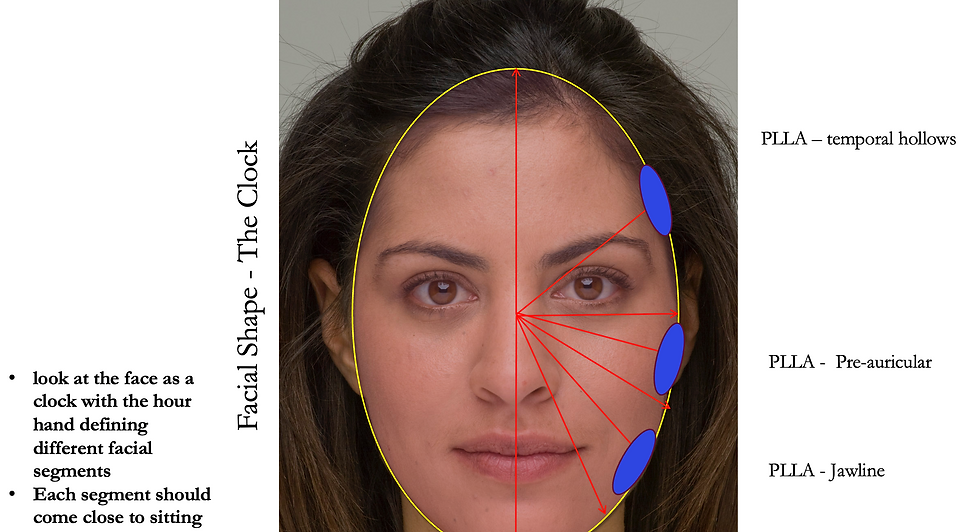
In our clinical masterclasses, we teach an 'outside-in, top-to-bottom' assessment. We look at the scaffolding of the face first. We use Sculptra biostimulators to restore the biological foundation. We address structural volume loss with conservative HA fillers.
And as I always tell my students: LIPS GO LAST.
If you haven't fixed the architecture of the midface and the support of the chin, the lips will never look natural. They will look like an afterthought.

Education vs. Influence
There is a difference between watching a result and understanding the mechanism. My Patreon gives you the mechanism.
When you follow my work on Patreon, you aren't just getting injection videos. You are getting the "why" behind the "how." You are getting access to the same clinical rigor that led to 12 peer-reviewed publications.
We discuss the latest AHPRA guidelines and how to navigate them. We break down the mathematics of beauty and the Fibonacci spiral. But most importantly, we stay grounded in the literature.

The Bottom Line
Your patients trust you with their faces. You should trust your mentor with your career.
We prioritize safety, research, and the "undone" look. Results should look restored and refreshed, never filled.
If you want clinical education grounded in evidence, join my Patreon. If your teacher hasn't contributed to the literature, whose data are you really following?
Join my Patreon for exclusive access to my research-led training modules.


Comments