Sculptra in Auckland: natural results that grow with you

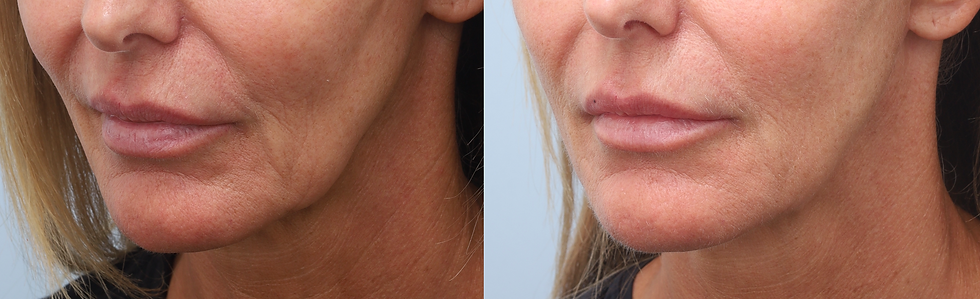
Why the smartest facial rejuvenation is the kind that nobody can quite put their finger on — and what the science actually says.
Mike Clague — Aesthetic Nurse BSc, Clinical Trainer
20+ years in medical aesthetics · Published researcher · Galderma-trained injector
I want to talk about the patients who come to see me and say the same thing: "I don't want to look done." They want to look rested, healthy, like themselves — only better. For many of these patients, Sculptra (poly-L-lactic acid, or PLLA) has become my preferred first conversation. Not because it is a shortcut, but because, done well, it is the opposite of one.
"The best aesthetic result is the one that makes people ask if you've been on holiday — not if you've had something done."
I have been training injectors across Australia and New Zealand for over a decade, and I see a consistent pattern: practitioners reach for volume-replacement fillers first, biostimulators second. I would argue that for many patients presenting with early-to-moderate volume loss and skin quality concerns, that order should be reversed.
What Sculptra actually does — the science without the spin
Sculptra is not a filler in the conventional sense. It does not sit in the tissue and physically occupy space. Instead, it works by triggering your body to rebuild its own structural scaffolding. The active ingredient — PLLA microparticles — initiates a controlled foreign-body reaction, which activates macrophages and subsequently fibroblasts, driving the production of new type I and type III collagen and elastin.
MECHANISM OF ACTION — SIMPLIFIED
1. Injection: PLLA microparticles are deposited in the deep dermis or subcutaneous plane.
2. Inflammatory phase (weeks 1–2): Macrophages engulf the particles; a controlled cellular response begins.
3. Fibroblast activation: TGF-β1 signalling drives fibroblast proliferation and ECM synthesis via the SMAD pathway.
4. Collagen deposition (months 1–6+): Type I and III collagen increases progressively; elastin and TIMP-1/2 expression also up-regulated.
5. Biodegradation: PLLA breaks down into lactic acid metabolites over approximately 24 months, leaving autologous collagen behind.
The TGF-β/SMAD signalling axis is well-characterised in wound healing and fibroblast biology. Its role in PLLA-driven collagenesis has been confirmed in both in vitro fibroblast models and 3D human skin models — this is not speculative mechanism, it is reproducible biochemistry (Avelar et al., Journal of Cosmetic Dermatology, 2024).
What the clinical evidence actually shows
I am not interested in marketing claims dressed up as science. So let me give you the numbers from peer-reviewed sources.
KEY CLINICAL DATA
90%
improvement in midfacial volume at 12 months — multicenter RCT, 2025 (PMC12273185)
71.6%
of patients showed ≥1-grade improvement in cheek wrinkle severity at 12 months vs 38.6% in the no-treatment control (RCT, Journal of Drugs in Dermatology, 2024)
25 months+
80% of patients maintained aesthetic correction to data cut-off in durability studies
91%
of patients satisfied with improved skin firmness; 85%+ reported natural-looking results (JDD, 2024)
A 2024 systematic review of 11 randomised controlled trials (Sánchez-Machado et al., Polymers, MDPI) confirmed increased dermal thickness, significant improvement in facial lipoatrophy severity, and effects sustained for at least 25 months. Two of those trials demonstrated superiority over injectable human collagen.
The safety profile is favourable. The most clinically significant historical adverse event — subcutaneous nodule formation — has been substantially reduced by improvements in reconstitution protocols (higher dilution volumes, adequate hydration time) and refined injection technique.
Why technique is everything — and why you should care
Here is where I need to be direct with you as a clinician: Sculptra is a technically demanding product. The results — and the safety — are highly technique-dependent. Overcorrection leads to nodules. Superficial injection risks papule formation. Poor dilution practice increases complication rates. Injecting without a thorough knowledge of facial anatomy in the context of ageing leads to unnatural results — the opposite of what we are aiming for.
My approach draws on over a decade of advanced facial anatomy training — including my adjunct lectureship at Monash University and my ongoing work in complications management alongside Professor Greg Goodman. I have trained physicians and nurses across Australia, New Zealand, and the United States in advanced injectable techniques. When I work with Sculptra, I am thinking in three dimensions: the age-related changes to bone, fat compartments, muscle, and skin simultaneously. Volume is not simply replaced — it is architecturally restored.
"Volume is not simply replaced with Sculptra — it is architecturally restored, layer by layer, over time."
Who is a good candidate?
In my Auckland clinic, the patients who tend to get the most out of Sculptra share a few characteristics. They are generally in their late thirties to mid-sixties, presenting with progressive volume loss — particularly in the midface, temples, and jawline — combined with skin quality decline: laxity, textural change, and loss of the subtle plumpness that healthy, well-hydrated skin has. They want improvement, but they want it to look earned. They don't want to look like someone else.
Sculptra is less suited to patients seeking immediate, pronounced volume correction — for that, hyaluronic acid fillers remain the appropriate first-line option. It is also contraindicated in patients with known hypersensitivity to any component, a history of keloid formation or hypertrophic scarring, and should not be used at sites of active infection or inflammation.
What to expect: a realistic timeline
Sculptra requires patience and planning. Most patients require two to three treatment sessions, spaced four to six weeks apart. Results are not immediate — this is by design. The collagen-building process takes time, and visible improvement typically becomes apparent from six to eight weeks post-first treatment, with optimal results at three to six months after the final session. Results are generally sustained for two years or more.
Patients must massage the treated areas twice daily for five days post-treatment — five minutes per area, five times per day (the "5-5-5" rule). This distributes the product and reduces the risk of nodule formation. I take time to explain this clearly at every appointment, because patient adherence to aftercare is a genuine clinical variable.
A note on honesty in aesthetics
I have been working in this industry long enough to have seen every trend come and go, and to have helped manage the complications left behind when things go wrong. The best outcome in aesthetic medicine is not the most dramatic transformation — it is the one the patient looks back on in five years and still feels good about. That means choosing products and techniques that work with anatomy and biology rather than against them.
Sculptra, when indicated and when performed by a skilled clinician who understands the underlying science, delivers exactly that: gradual, natural-looking improvement that respects who the patient is while addressing what ageing has taken away. That is what I aim for in every treatment.
SELECTED REFERENCES
1. Avelar LET et al. Unveiling the mechanism: injectable poly-L-lactic acid's evolving role. Journal of Cosmetic Dermatology. 2024. doi:10.1111/jocd.16635
2. Sánchez-Machado DI et al. Efficacy and safety of poly-L-lactic acid in facial aesthetics: a systematic review. Polymers. 2024;16(18):2564.
3. Lin F et al. Advances in poly-L-lactic acid injections for facial and neck rejuvenation. Plastic and Reconstructive Surgery – Global Open. 2025. PMC12323926.
4. Effectiveness and safety of Sculptra PLLA-SCA injectable implant in correction of cheek wrinkles. Journal of Drugs in Dermatology. 2024;23(1):1297–1305. doi:10.36849/JDD.7729
5. Haddad A et al. Injectable poly-L-lactic acid for body aesthetic treatments: an international consensus. Aesthetic Plastic Surgery. 2024. PMC11965205.
6. Multicenter RCT: midfacial volume improvement with PLLA-SCA at 12 months. 2025. PMC12273185.


Comments